IMPROVISATION  - by Michael Furstner

Lesson 4a - KEYBOARD CHORD VOICINGS FOR THE BLUES
_____________________________________________________________________________

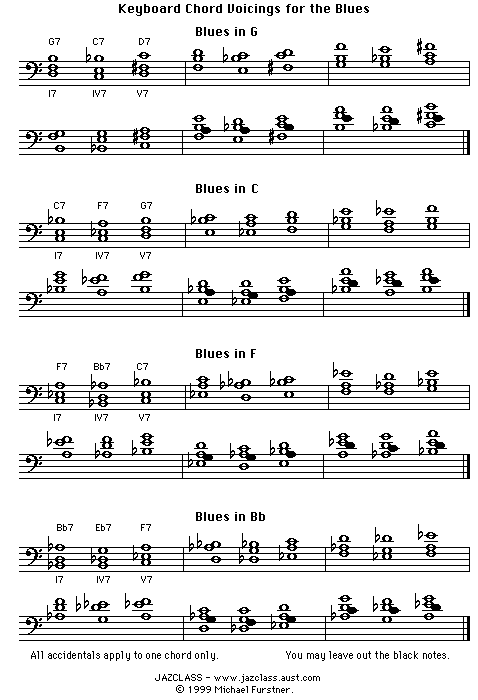
In the Improvisation Library under 'Scales & Chords' is a file called
Keyboard Chord  voicings for the Blues.
It contains useful chord voicings for the Blues in the keys of G, C, F and
Bb.
You can use these in the left hand while playing the melody or an
improvisation in the right hand.


LEFT HAND
Play 3- or 4-note chords in the left hand so that the lowest note of the
chord falls in the range from Middle C down to A a 10th lower.


               Lowest note of chord
                within this range
              |<------------------->|
              |                     |
C' D' E' F' G' A' B' C D E F G A B c d e f g a b c'
                                   |
                               "Middle C"


This applies to all "closed position" chords (all chord tones fall within the
span of 1 octave and are usually played with one hand.)

Chords played above this range  sound too tinny, they also interfere with the
melody line. Chords played below this range sound too muddy.


RIGHT HAND
You can use the same types of voicings also for the right hand.
In this case they sound best when the voicing  STRADDLES or touches Middle C.
This leaves the left hand free to play bass notes, a boogie pattern or a
walking bass line.


OTHER ONE HAND VOICINGS
You can also experiment with 2-note skeleton chord segments.
Various combinations are possible.

For C7 : C E - C G - C Bb - E Bb - E c - G e, etc.

Most effective are the 3rd and 7th of the chord together, for these are the
two ESSENTIAL chord tones that DEFINE THE CHORD quality.

These work very well when you play in a small group with a bass, or with the
play-a-long tracks.
(The bass always plays the root and 5th of each chord, so there is no need
 for the keyboard or guitar to include those notes always in their chord
 voicings.)

You can add various other HIGHER notes to this combination :

           SKELETON CHORD              ADDITIONAL NOTE(S)

  D7  =   F# C   or   C   f#     add any other note(s) except  G  or C#

  G7  =   F  B   or   B   f      add any other note(s) except  F# or C

  C7  =   E  Bb  or   Bb  e      add any other note(s) except  F  or B

  F7  =   A  Eb  or   Eb  a      add any other note(s) except  E  or Bb

  Bb7 =   D  Ab  or   Ab  d      add any other note(s) except  Eb or A

  Eb7 =   G  Db  or   Db  G      add any other note(s) except  D or Ab


The added note provides additional COLOUR, but does not alter the quality and
function of the dominant chord.


RHYTHM
When you start to learn a song it is a good idea to play the left hand chords
in steady crotchets (one chord on each beat). This helps you to play the
right hand melody correctly.

Once you have that under control you can vary the left hand rhythm.
Use it for emphasis or to create a simple rhythmic counter melody to the
right hand.
Leave space where the right hand is busy, be more active where the right hand
plays a long note or where there is a rest.


_____________________________________________________________________________

                     JAZCLASS - www.jazclass.aust.com

                  Copying permitted for personal use only.

           Copyright 1997 Michael Furstner. All rights reserved.
|